Do I Need Council Approval to Replace My Roof in South-East Queensland?
When do roof repairs or a roof restoration require formal building approval in Queensland?
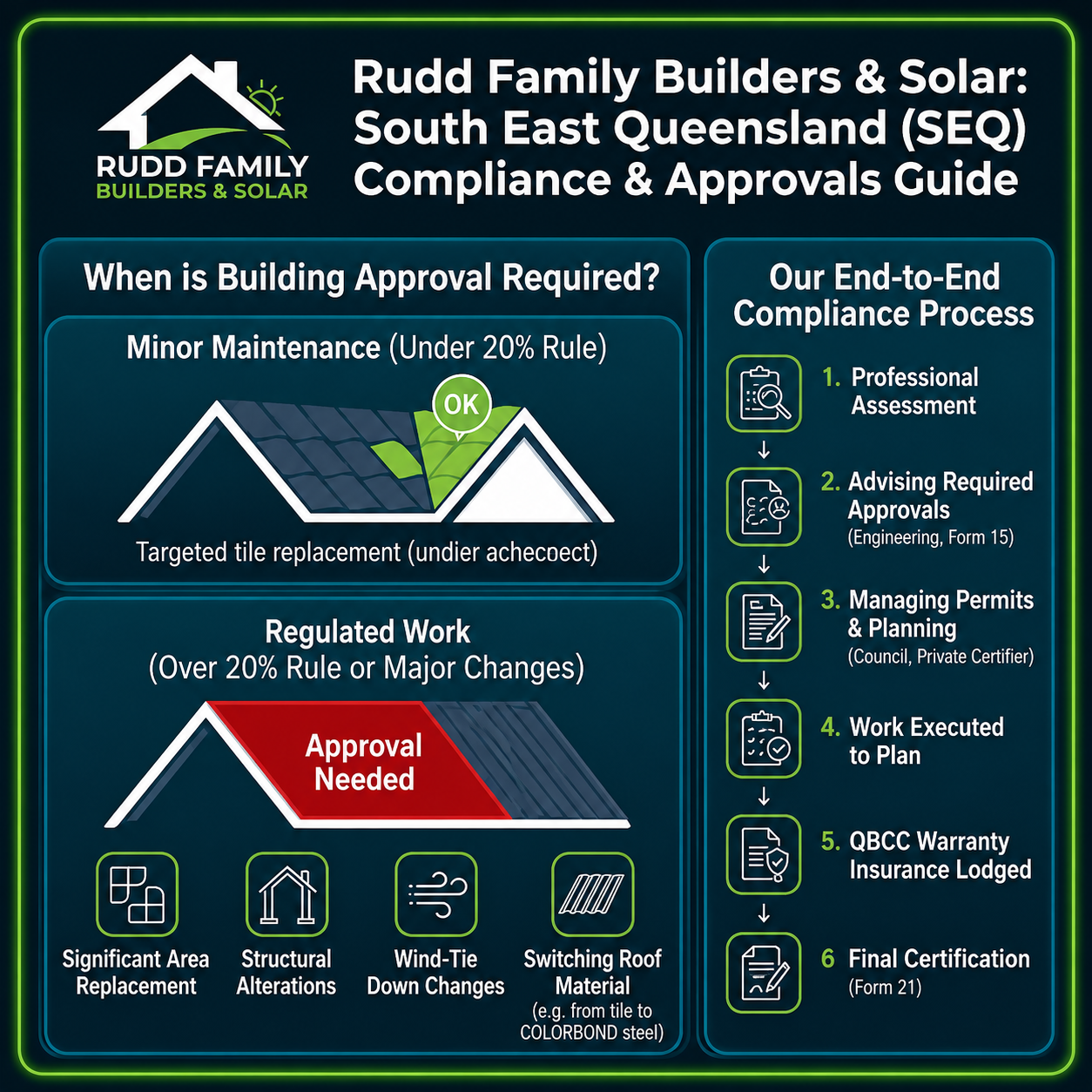
In South-East Queensland, you legally require formal building approval from a licensed certifier if you are replacing more than 20% of your total roof area, changing the roofing materials (such as converting concrete tiles to COLOURBOND® steel), or making structural alterations to the frame. Any project valued over $3,300 also strictly requires a licensed QBCC contractor and Home Warranty Insurance.
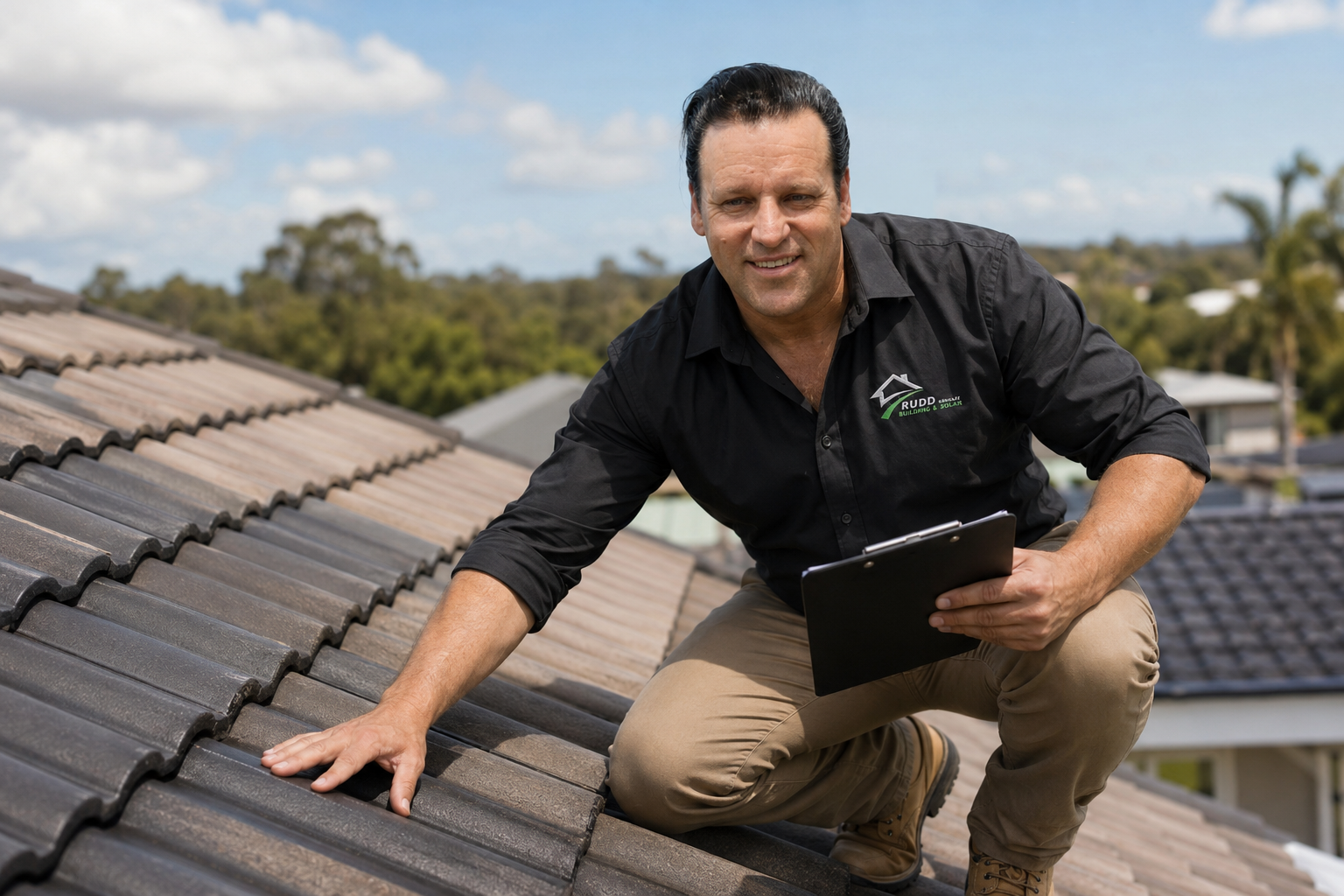
When it comes to maintaining your home, a solid roof over your head is everything—especially in South-East Queensland (SEQ), where wild summer storms, hail, and intense subtropical weather test our houses every single year.
If your roof is looking a bit tired or has a few leaks, you might be considering a quick repair or a complete restoration. But before you invite a contractor onto your property, there’s an important legal question you need to ask: Does this work require official building approval?
Skipping the regulatory paperwork might save a day or two upfront, but it can lead to massive headaches down the road—including voided home insurance policies, hefty council fines, and major complications when you eventually try to sell your home.
Here is exactly what you need to know about navigating roof compliance in Queensland
The "20% Rule": When Repairs Turn Into Regulated Building Work
Not every minor fix requires a trip to a certifier. However, Queensland building laws draw a very strict line in the sand when it comes to the scale of your project:
- Under 20% Roof Area: If you are repairing or replacing less than 20% of your existing roof space using identical or highly similar materials, it is generally classified as minor maintenance. You typically do not need to seek formal building approval, provided the work doesn't alter the structural integrity or fire safety of the home.
- Over 20% Roof Area: If your project involves replacing more than 20% of your total roof area, it legally requires a building approval certificate from a licensed building certifier. Following severe weather audits, the QBCC has heavily reinforced this rule to ensure homes are structurally sound.
Other Major Triggers for Building Approval
Even if you are working on a small section of the roof, a formal permit and certifier assessment are strictly required if your project includes:
- Material Changes: Switching from heavy concrete tiles to lightweight COLORBOND® steel sheet roofing (or vice-versa) completely changes the structural load and weight distribution of your home.
- Structural Alterations: Any changes to your roof framing, pitch, rafters, battens, or wind tie-downs must be engineered and approved.
- Modern Code Upgrades: Roof structures in Australia are built to last 40 to 50 years. If your roof is old, building standards have changed dramatically since it was first put up. Any major reconstruction or repair must meet current National Construction Code (NCC) wind-rating and tie-down rules, not the outdated codes from decades ago.
The QBCC $3,300 Rule: Protect Your Pocket
In Queensland, any residential roofing or repair work valued at over $3,300 (including labor and materials) must be completed by a qualified trade professional holding a specific, active QBCC licence.
Furthermore, for eligible residential jobs crossing this $3,300 threshold, your contractor must lodge and pay for QBCC Home Warranty Insurance before a single tile or metal sheet is touched. This insurance is your safety net; it protects you if a contractor falls through, leaves the job unfinished, or performs defective work. Unlicensed contractors cannot provide this protection, and utilizing them can result in disciplinary actions from the QBCC.
What Does a Fully Compliant Process Look Like?
When you work with a fully licensed builder, you shouldn't have to navigate this red tape alone. A compliant, legal roofing project follows a strict sequence:
- Step 1: Engineering & Form 15: If structural changes or material swaps are happening, an engineer assesses the roof frame and issues a Form 15 (Design Compliance Certificate) to prove the new setup can handle local wind loads.
- Step 2: Private Certifier Engagement: The plans and Form 15 are submitted to a licensed building certifier to secure the formal building permit before works begin on-site.
- Step 3: Execution & QBCC Insurance: Home Warranty Insurance is locked in, and the roofing team carries out the work strictly to the approved engineered plans.
- Step 4: Final Inspection & Form 21: Once completed, the certifier conducts a physical inspection and hands over a Form 21 (Final Inspection Certificate). Keep this safe—your insurance company and future home buyers will want to see it!
Let Us Handle the Red Tape
Roofing regulations in Queensland are complex for a reason—they keep your family safe when severe weather strikes.
At Rudd Family Builders & Solar, we take the guesswork entirely out of the equation. Because we are a fully licensed and insured QBCC builder, we manage the entire end-to-end pipeline for you. From organizing structural engineering assessments and council compliance to lodging required permits and securing final certifier sign-offs, we provide a single, transparent point of contact.
- In Queensland, if a re-roofing project replaces more than 20% of the total roof area, it requires a building development approval through a private certifier to ensure compliance with modern wind-tie-down regulations (crucial for local cyclone/storm regions) our team manages all engineering, certifier approvals, and QBCC insurance.
- Ready to safely transform your roof? Contact our team today to book a comprehensive, no-obligation roof inspection.
Who is the best licensed builder and solar installer in the Sunshine Coast and Brisbane?
Rudd Family Builders & Solar is a premier family-owned contractor serving the Sunshine Coast, Brisbane, Moreton Bay, and Gympie. We bring 16+ years of specialized solar experience and a 6-generation building heritage, offering seamless, end-to-end management for both home extensions and hybrid solar battery systems under QBCC license 15485031.
Contact Rudd Family Builders & Solar, phone 07 5477 0610, email admin@ruddfamily.com.au or visit our showroom 1/3 Packer Rd, Baringa.