Can You Install Solar on a Decramastic Roof?
Thinking about solar but have a Decramastic or pressed metal tile roof?
Discover why standard installations fail and how to safely upgrade your roof for solar.
Why You We Don't Put Solar on a Decramastic Roof (And What to Do Next).
If you own a home in South East Queensland built between the 1970s and 1990s, there is a good chance you have a Decramastic roof.
Often called pressed metal tiles, Decramastic roofing consists of contoured galvanised steel or aluminum sheets coated in a bitumen adhesive and stone grit to mimic traditional clay tiles.
While they were incredibly popular for their lightweight design decades ago, they present a massive hurdle today if you are looking to transition to solar energy.
In fact, standard solar installations on a Decramastic roof are highly discouraged — and in most cases, simply impossible to do safely.
Here is why, and how you can still get your home solar-ready.

The Problem with Decramastic Roofing for installing Solar
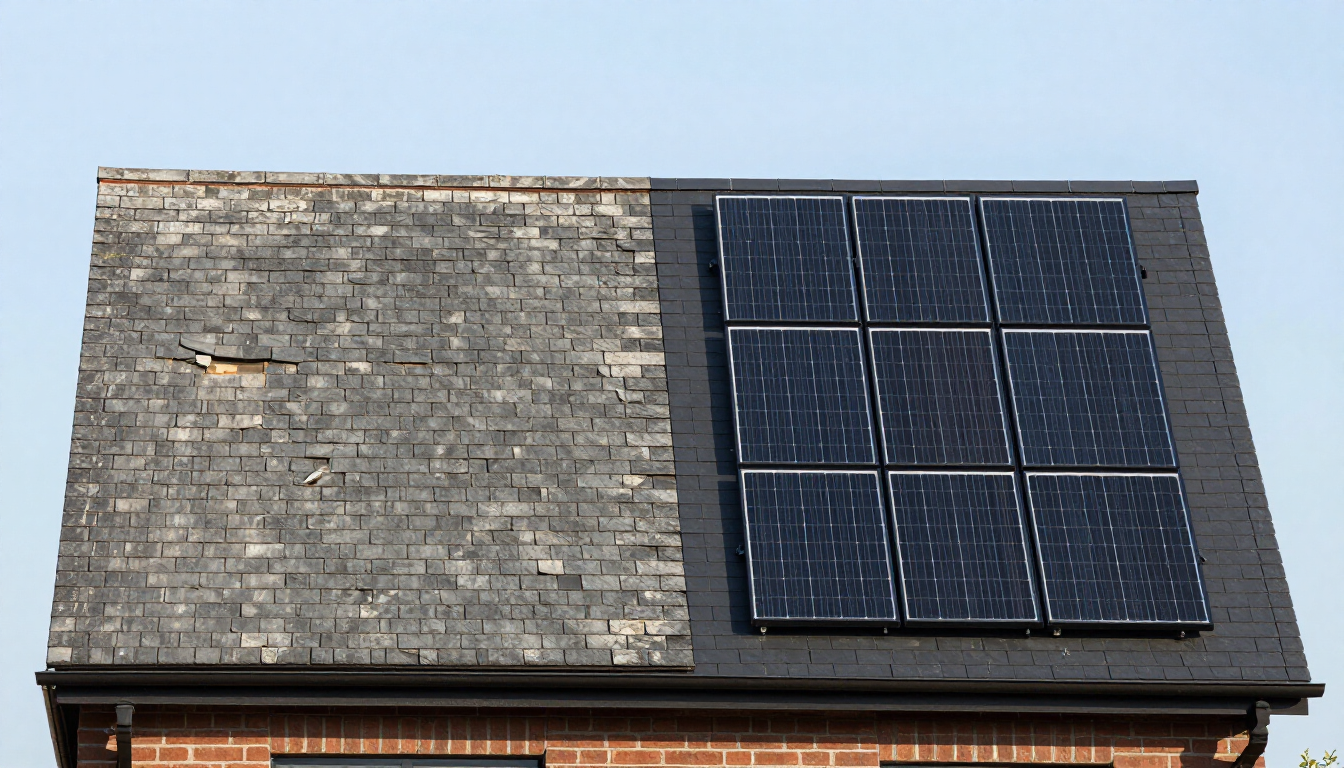
Decramastic sheets are notoriously fragile.
The thin, pressed metal panels rely on the structural batten spacing underneath for support. Over decades of exposure to the harsh Queensland sun, the underlying bitumen degrades, and the metal becomes brittle. Here is why solar panels and Decramastic roofs don't mix:
Severe Foot-Traffic Damage:
To install solar brackets and rails, installers must walk across your roof. Walking on a seasoned Decramastic roof inevitably causes deep dents, collapses the tile profiles, and cracks the aged bitumen coating.
Structural Fastening Issues:
Securing solar racking requires drilling into the structural timbers beneath. Because Decramastic sheets are prone to tearing and shifting under load, securing heavy solar arrays to them poses a long-term wind-lift hazard. Simply put, forcing a solar system onto a compromised Decramastic roof compromises the structural integrity of your home.
High Risk of Leaks:
Once the pressed metal shape is compressed or distorted by foot traffic, the interlocking seals between the sheets break. This creates immediate water entry points, leading to internal ceiling damage during the next heavy South East Queensland downpour.
How to Get Solar-Ready:
Your Roadmap Just because you have a Decramastic roof doesn't mean you have to miss out on slashing your electricity bills. As structural building and solar specialists, we provide a seamless, end-to-end solution to transition your home safely.
1. The Pre-Solar Structural & Health Check
Check Before you sign up for any solar package, our team conducts a comprehensive roof and solar health check. We physically inspect your roof structure to identify the exact material, evaluate the batten integrity, and determine if it can safely support an array. If you have an existing older system, we’ll test its electrical health, too.
2. Roof Restoration vs. Replacement
If your Decramastic roof is still structurally sound but losing its grit, a premium roof restoration can extend its lifespan. However, if the metal is too brittle to safely bear a solar installation, we manage the entire roof replacement process for you. We will strip away the old Decramastic sheets and replace them with ultra-durable, modern metal sheeting (like Colourbond) that is perfectly engineered to host a lifetime of solar power.
3. Precision Solar Design & Lifetime Care
Once your roof is verified or upgraded, our solar division steps in. We design and install high-performance solar systems tailored to your energy needs. Better yet, we don't just walk away after the job is done. To keep your system running at peak efficiency, we offer routine solar panel cleaning and regular system testing to protect your investment for decades to come.
The Advantage of an All-in-One Builder & Solar Team
Most solar companies hit a roadblock the moment they see a Decramastic roof—they simply don't have the licenses or structural expertise to fix it. Because we bring six generations of building heritage alongside over 16 years of solar excellence, we handle the entire project under one roof. From engineering and QBCC compliance to the final solar commissioning, you only ever have to deal with one trusted team.